Health and Safety Policy for Man With Van Hampstead
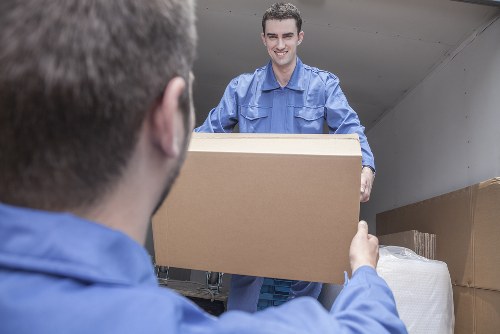 Man With Van Hampstead is committed to carrying out every move with a clear focus on health, safety, and responsible working practices. This policy sets out the standards expected from all staff, contractors, and anyone representing the business during loading, transport, and unloading activities. It applies to every stage of a job, whether the task involves a small domestic move, a single-item collection, or a larger relocation requiring repeated lifting and careful handling. Our approach is designed to reduce risk, protect property, and support a safe working environment at all times.
The company recognises that moving work can involve physical strain, awkward access, uneven surfaces, traffic exposure, and the handling of heavy or fragile items. For that reason, safety awareness is treated as part of the job rather than an extra measure. Every operative is expected to use sound judgement, follow agreed procedures, and stop work if conditions become unsafe. This includes paying attention to weather, floor conditions, lighting, and the space available for movement.
We also expect all team members to act professionally and to take reasonable steps to protect customers, members of the public, and colleagues. Careful preparation is essential, and each assignment should be reviewed before work begins so that any foreseeable hazard can be managed in advance. The aim is to complete each move efficiently while keeping the risk of injury or damage as low as reasonably possible.
Responsibilities and Safe Working Practices
All staff working for Man With Van Hampstead must remain fit for duty and mentally alert while carrying out their responsibilities. Anyone who feels unwell, fatigued, or unable to perform tasks safely must report this immediately and should not continue with strenuous work. Safe moving depends on good communication, controlled pacing, and a willingness to ask for help when an item is too awkward or heavy to manage alone.
Manual handling is one of the most important safety considerations in the business. Team members are trained to assess weight, shape, balance, and grip before lifting. Where possible, loads should be split into smaller parts, and trolleys, straps, blankets, or other suitable equipment should be used to reduce strain. The company encourages proper lifting technique, but it also recognises that the safest option is sometimes to avoid lifting entirely and use an alternative method.
Vehicle safety is equally important.  Drivers must carry out basic checks before setting off, including tyres, lights, mirrors, fuel, load security, and the general condition of the van. Items should be packed in a stable manner so they do not shift during transit. Loads must be evenly distributed and secured using appropriate restraints. A safe journey depends on careful driving, adherence to road rules, and avoiding distraction.
Risk Assessment and Control Measures
Before any job begins, a practical risk assessment should be completed. This does not need to be complicated, but it must identify likely hazards and suitable controls. Examples include narrow staircases, low ceilings, poor parking access, slippery surfaces, or large items that may require extra lifting assistance. If a risk cannot be controlled adequately, the work should be delayed, modified, or refused where necessary.
We also place strong emphasis on protecting property during removals. Floors, door frames, bannisters, and walls should be treated carefully, especially in confined spaces. Protective materials may be used where appropriate, and all items should be carried with attention to their edges, weight, and fragility. The company expects operatives to keep pathways clear and to avoid leaving tools or packaging where they may become trip hazards.
At the centre of this policy is a simple principle: prevention is better than correction.  Safe working habits reduce the chance of injury, damage, and delays. Each task should be approached calmly and methodically, with enough time allowed for loading and unloading so that haste does not compromise judgement. Good planning is not only efficient; it is one of the most effective ways to maintain consistent safety standards.
Training, Communication, and Incident Reporting
All workers are expected to receive appropriate instruction in safe handling, equipment use, customer interaction, and emergency awareness. Refresher training should be provided whenever working methods change or when a need is identified through review. Training is intended to build confidence and ensure that everyone understands how to work safely in real moving conditions.
Clear communication helps prevent accidents. Instructions should be agreed before lifting begins, and one person should usually take the lead during coordinated moves. If a hazard is spotted, the issue must be raised immediately so that the team can respond without delay. This applies to unsafe access points, broken items, damaged equipment, or any situation that could expose people to unnecessary risk.
Any accident, near miss, injury, or property damage must be reported as soon as possible and recorded in line with company procedure.  The purpose of reporting is not to assign blame but to understand what happened and to prevent a repeat occurrence. Where needed, the business will review the event and update working practices, equipment checks, or training arrangements accordingly.
Review, Welfare, and Continuous Improvement
The company is committed to maintaining a workplace culture where welfare matters. Staff should be given suitable breaks, access to water where practical, and reasonable time to recover after particularly demanding tasks. Working conditions should be monitored, and attention should be given to physical strain, stress, and weather-related exposure. In colder or hotter conditions, extra care may be needed to avoid reduced concentration or exhaustion.
Equipment should be kept in good condition and used only for its intended purpose. Damaged straps, faulty dollies, or worn protective materials must be removed from service until inspected or replaced. Safe equipment is a basic requirement, not an optional extra, and routine checks help ensure that each move can be completed with confidence and control.
Man With Van Hampstead reviews this policy regularly to keep it effective, practical, and up to date.  Any improvements identified through experience, incident reviews, or internal monitoring should be introduced without delay where possible. The company’s goal is to support reliable service while protecting people, property, and working standards. By following these principles consistently, the business can maintain a safe and responsible approach to every move it undertakes.